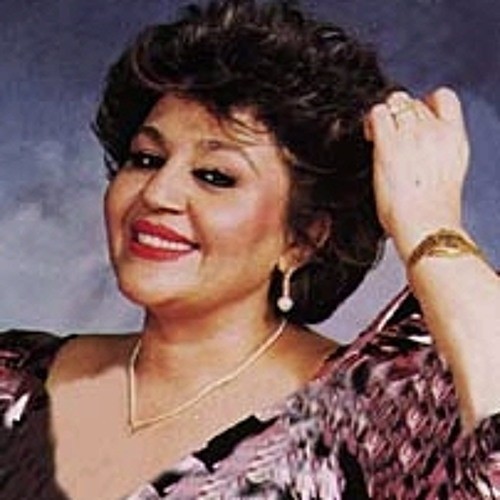
Hayedeh

Hayedeh came to singing through the classical avaz tradition, a student of the composer Ali Tajvidi, and entered through Radio Tehran's Golha programs, the vetted center of mid century Persian music. Her voice was a true contralto, rare in Persian pop, and she carried the formality of avaz into three minute songs without diminishing either. She left Iran six months before the revolution and never went back; she sang for the audience that had also left, in London and Los Angeles, until she died the day after a concert. Her grave at Westwood Village Memorial Park has become a place of pilgrimage for the diaspora.
Hayedeh and the singer Mahasti were sisters, two defining voices of the same era, and Iran compared them from the start. Mohammad Heydari, who composed for both, put the difference plainly: Mahasti's voice was softer, Hayedeh's had more power - and at home, he said, it was Hayedeh who had the deeper feeling for words. She entered through Radio Tehran's Golha programs in 1968, singing in the classical avaz manner before she ever sang pop, and the training stayed audible: the ornament, the breath, the formal weight she could set behind a plain sentence. In 2019 the Los Angeles City Council formally recognized her - the city where her audience in exile had made a second home.