Ageh Ye Rooz

Ageh Ye Rooz

Faramarz Aslani

Faramarz Aslani

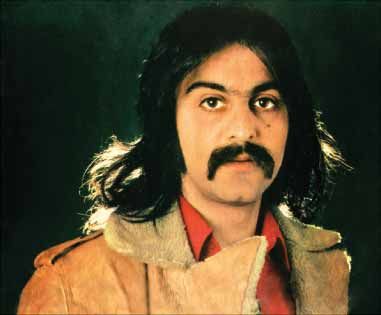
If one day you go: Faramarz Aslani wrote, composed and sang the great Persian song of leaving. 1977, one voice, one guitar.

If one day you go: Faramarz Aslani wrote, composed and sang the great Persian song of leaving. 1977, one voice, one guitar.

Select

Lyrics & Translation

English

Romanized

فارسی

English translation of the lyrics for meaning and comprehension

If one day you go on a journey, leave my side without a word

I become a captive of dreams, I am alone once again

I tell the night to stay with me, I tell the wind to sing till morning

to sing of a beloved's land, why do you go and leave me alone

If you forget me, leave my embrace

I become a seabird, I let myself go into the grip of the waves

I tell my heart to keep silent, I go so that everyone knows

I go toward that land where you will not leave me alone

If one day your name sounds in my ear

and your sorrow comes back to take hold of me

I tell my heart not to interfere, to let your pain become a cure

to run through all of my being, so I can sing for you again

so I can sing for you again

If your heart wants us to be each other's beloved again

like the old days, to sit down together and not get up till dawn

your heart must take on color, must take up a song again

must take the color of that land where you will not leave me alone

If you want to stay with me, come while youth remains

come while skin still clings to bone, do not leave my heart alone

let my night take on color, take up a song again

let it take the color of that land where you will not leave me alone

If one day your name sounds in my ear

and your sorrow comes back to take hold of me

I tell my heart not to interfere, to let your pain become a cure

to run through all of my being, so I can sing for you again

If one day your name sounds in my ear again

and your sorrow comes back to take hold of me

I tell my heart not to interfere, to let your pain shift its place

to run through all of my being, so I can sing for you again

so I can sing for you again

so I can sing for you again

so I can sing for you again

Words

سفر

Safar

Journey

Safar is a journey, any length, any direction. The song opens on it, ageh ye rooz beri safar, if one day you go on a journey, and never says where to or for how long; every verse after is what the singer will do if the traveller does not come back. Aslani wrote the words and the music himself and released the song in 1977, two years before a revolution sent much of his audience on journeys with no return date.

سفر

Safar

Journey

Safar is a journey, any length, any direction. The song opens on it, ageh ye rooz beri safar, if one day you go on a journey, and never says where to or for how long; every verse after is what the singer will do if the traveller does not come back. Aslani wrote the words and the music himself and released the song in 1977, two years before a revolution sent much of his audience on journeys with no return date.

بی‌خبر

Bi-khabar

Without news, without warning

Bi-khabar joins khabar, news, to bi-, without. Beri zeh pisham bi-khabar: leaving without news, no warning before and no word after. Between people separated by distance khabar is not small talk, it is the proof of being alive, asked for first in every call. In the line the going and the silence are one act.

بی‌خبر

Bi-khabar

Without news, without warning

Bi-khabar joins khabar, news, to bi-, without. Beri zeh pisham bi-khabar: leaving without news, no warning before and no word after. Between people separated by distance khabar is not small talk, it is the proof of being alive, asked for first in every call. In the line the going and the silence are one act.

اسیر

Asir

Captive

Asir is a captive, a prisoner. The singer's first answer to being left is asir-e royâhâ misham, I become a captive of dreams. Classical Persian love poetry held the lover captive for centuries, heart as prisoner, beloved as keeper; the song takes the old image and locks it onto dreams, a cell that only appears once the beloved is gone.

اسیر

Asir

Captive

Asir is a captive, a prisoner. The singer's first answer to being left is asir-e royâhâ misham, I become a captive of dreams. Classical Persian love poetry held the lover captive for centuries, heart as prisoner, beloved as keeper; the song takes the old image and locks it onto dreams, a cell that only appears once the beloved is gone.

دیار

Diyâr

Land, homeland

Diyâr is land in the register of longing: the stretch of country a person is from, older and softer than keshvar, country. The song reaches for it again and again, always somewhere else, diyâr-e yâri, a beloved's land, then oon diyâri ke toosh mano tanhâ nazâri, that land where you will not leave me alone. The place is never named. Diyâr rarely is; it is the word for land as missed, not as mapped.

دیار

Diyâr

Land, homeland

Diyâr is land in the register of longing: the stretch of country a person is from, older and softer than keshvar, country. The song reaches for it again and again, always somewhere else, diyâr-e yâri, a beloved's land, then oon diyâri ke toosh mano tanhâ nazâri, that land where you will not leave me alone. The place is never named. Diyâr rarely is; it is the word for land as missed, not as mapped.

آواز

Âvâz

Song, singing

Âvâz is song as the act of singing, and in Persian classical music the name of the unaccompanied vocal art itself. It is where every verse of this song lands: ke bâz barât âvâz bekhoonam, so I can sing for you again, the answer to leaving, to forgetting, to sorrow arriving with a name. The recording ends on the line alone, sung three times over.

آواز

Âvâz

Song, singing

Âvâz is song as the act of singing, and in Persian classical music the name of the unaccompanied vocal art itself. It is where every verse of this song lands: ke bâz barât âvâz bekhoonam, so I can sing for you again, the answer to leaving, to forgetting, to sorrow arriving with a name. The recording ends on the line alone, sung three times over.

رویا

Royâ

Dream

رویا

Royâ

Dream

تنها

Tanhâ

Alone

تنها

Tanhâ

Alone

باد

Bâd

Wind

باد

Bâd

Wind

صبح

Sobh

Morning

صبح

Sobh

Morning

یار

Yâr

Beloved, companion

یار

Yâr

Beloved, companion

آغوش

Âghoosh

Embrace

آغوش

Âghoosh

Embrace

پرنده

Parandeh

Bird

پرنده

Parandeh

Bird

دریا

Daryâ

Sea

دریا

Daryâ

Sea

موج

Moj

Wave

موج

Moj

Wave

چنگ

Chang

Grip, claw

چنگ

Chang

Grip, claw

دل

Del

Heart

دل

Del

Heart

خاموش

Khâmoosh

Silent

خاموش

Khâmoosh

Silent

نوم

Noom

Name, spoken form of nâm

نوم

Noom

Name, spoken form of nâm

غم

Gham

Sorrow

غم

Gham

Sorrow

مبتلا

Mobtalâ

Taken hold of, afflicted

مبتلا

Mobtalâ

Taken hold of, afflicted

دوا

Davâ

Cure, remedy

دوا

Davâ

Cure, remedy

سحر

Sahar

Dawn

سحر

Sahar

Dawn

جوونی

Javooni

Youth

جوونی

Javooni

Youth

Cultural Notes

Ageh Ye Rooz appeared on Faramarz Aslani's first album, Delmashghooliha (Occupation of the Heart), recorded for CBS in 1977. He wrote the words, composed the music, and sang it over his own guitar. The song runs on if. If you leave one day, if you forget me, if you want us back, if you want to stay: four conditions, and every one of them is answered with the same line, that the singer will sing for you again.

The record was made against the fashion of its day. Iranian pop in 1977 meant orchestras and string sections, and the executives wanted them here too. Aslani refused. With the guitarist Armik and the producer Marcel Stepanian he cut the album on acoustic guitars, bass, percussion and a lute, and Latin and flamenco rhythms came into Persian song with it.

Aslani died in Maryland on March 20, 2024, the day that year's Nowruz began. By then the song had been re-recorded by Aslani himself with Dariush in 2011, and carried into other languages by singers in Turkish and French.

Sign up to our newsletter to get the latest updates

Made with ❤️ for Farsi enthusiasts

© 2026 Learn Farsi with Songs. All Rights Reserved.

A project by Golbarg - hi@golbarg.org

Sign up to our newsletter to get the latest updates

Made with ❤️ for Farsi enthusiasts

© 2026 Learn Farsi with Songs. All Rights Reserved.

A project by Golbarg - hi@golbarg.org